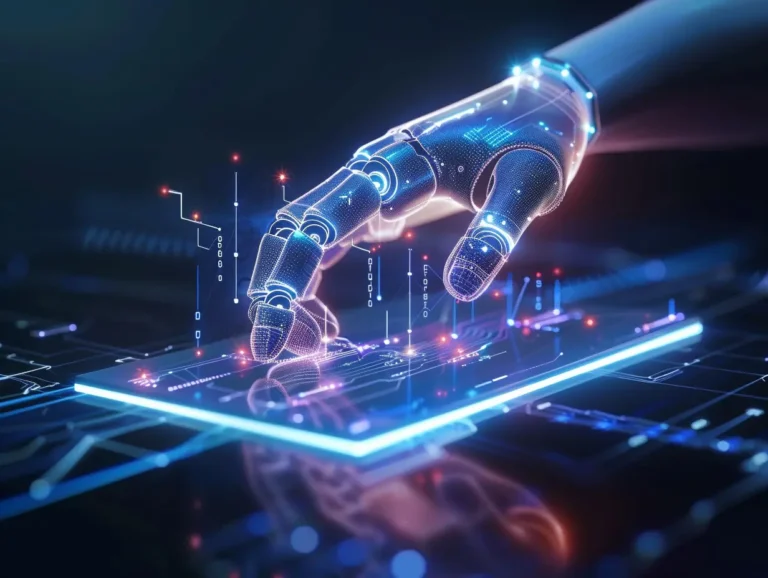
In recent years, cybersecurity has become one of the most critical issues for companies across all industries. With the growing digitization of business processes and the exponential increase in the amount of data collected and exchanged online, cyber threats have evolved and multiplied. Faced with this complexity, traditional defense methods have proven insufficient. This is where artificial intelligence (AI) comes into play, ushering cybersecurity into a new era.
The combination of artificial intelligence and cybersecurity offers innovative solutions for addressing increasingly sophisticated threats. AI enables organizations to monitor, analyze, and respond in real time to a range of cyberattacks, improving their ability to prevent and respond to such threats.
The Evolution of Cybersecurity
Traditionally, cybersecurity relied on static approaches, such as firewalls and antivirus software, which detected threats based on known patterns. However, modern attacks have become more complex, often exploiting zero-day vulnerabilities or social engineering techniques that are difficult to detect using traditional methods. Hackers use advanced techniques, such as polymorphic malware, which changes its form to evade security checks.
In this context, AI offers an effective solution to these challenges, enabling dynamic and continuous monitoring of networks, identifying anomalous behavior, and detecting potential threats before they can cause significant damage.
How Artificial Intelligence Is Revolutionizing Cybersecurity
Artificial intelligence offers sophisticated tools that enable companies to address cybersecurity risks proactively, rather than merely reactively. Among the key benefits of integrating AI and cybersecurity are:
Automatic Threat Detection
AI can analyze enormous amounts of data in real time, detecting anomalies that might be missed during a manual analysis. Using machine learning algorithms, AI systems learn from the behavioral patterns of the network and devices, immediately identifying suspicious activity.
Prevention of Advanced Attacks
Thanks to its ability to recognize anomalous patterns, AI can prevent sophisticated attacks, such as phishing or DDoS attacks. AI can anticipate attackers' moves and stop them before they can compromise corporate systems.
Automation of Incident Response
Artificial intelligence not only identifies threats but can also respond automatically. AI systems can isolate compromised machines, block suspicious connections, and initiate countermeasures without human intervention. This helps reduce response times and limit damage.
Predictive Analytics
By using large amounts of historical and current data, AI can predict potential attacks by identifying patterns that indicate possible vulnerabilities. This approach allows companies to take preventive measures before a threat becomes a reality.
Lifelong Learning
AI systems are based on algorithms that constantly learn from experience. This means that as hackers develop new techniques, artificial intelligence adapts and continuously improves its defensive capabilities.
The Challenges of Integrating AI and Cybersecurity
Despite its many advantages, integrating artificial intelligence into cybersecurity also presents challenges. First, a large amount of data is needed to effectively train AI models. Companies must therefore be able to collect and manage this data securely, without exposing it to additional risks.
Furthermore, because AI is based on complex algorithms, it can be difficult for humans to fully understand the decisions made by the system. This raises the issue of the “black box”—that is, the inability to explain how AI arrives at certain conclusions. Finally, there is a risk that hackers themselves will use artificial intelligence to develop even more advanced and difficult-to-detect attacks.
The Future of Cybersecurity with AI
AI has the potential to radically transform the way companies protect their systems and data. However, artificial intelligence cannot be considered a definitive solution. It must be integrated into a broader security strategy that also includes traditional solutions, employee training, and robust data governance.
In a world where cyberattacks are becoming increasingly sophisticated and frequent, adopting advanced technologies such as AI is not just a strategic choice, but a necessity. Companies that are able to fully leverage the potential of artificial intelligence will be able to anticipate threats, protect their digital assets, and ensure business continuity in an ever-evolving technological landscape.
Ultimately, the new era of cybersecurity, driven by artificial intelligence, is not just about defending against risks, but about adopting a proactive and intelligent approach to protecting information and digital infrastructure.